Quantum Computing Discovery Improves Processing Time, Accuracy
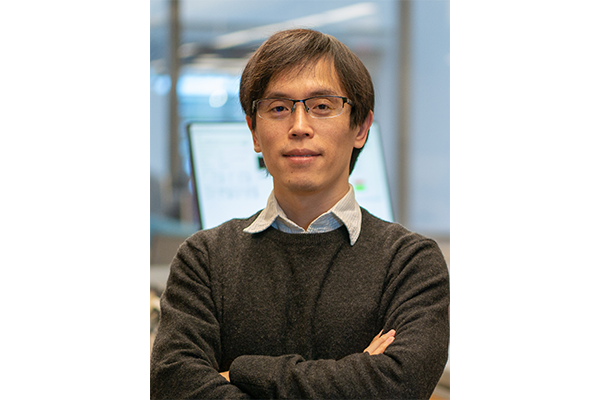
Xufeng Zhang, assistant professor of electrical and computer engineering, in collaboration with Argonne National Laboratory and the University of Notre Dame, completed research to improve quantum computing performance by isolating qubits and optimizing the environment so they are insensitive to noise, which so greatly impacts them that they are destabilized. A research paper, “Electron Charge Qubits With 0.1 Millisecond Coherence Time,” was published in Nature Physics.
Xufeng Zhang, assistant professor of electrical and computer engineering, in collaboration with Argonne National Laboratory and the University of Notre Dame, authored “Electron Charge Qubits With 0.1 Millisecond Coherence Time,” a paper focused on breakthrough research in quantum computing that was published in Nature Physics.
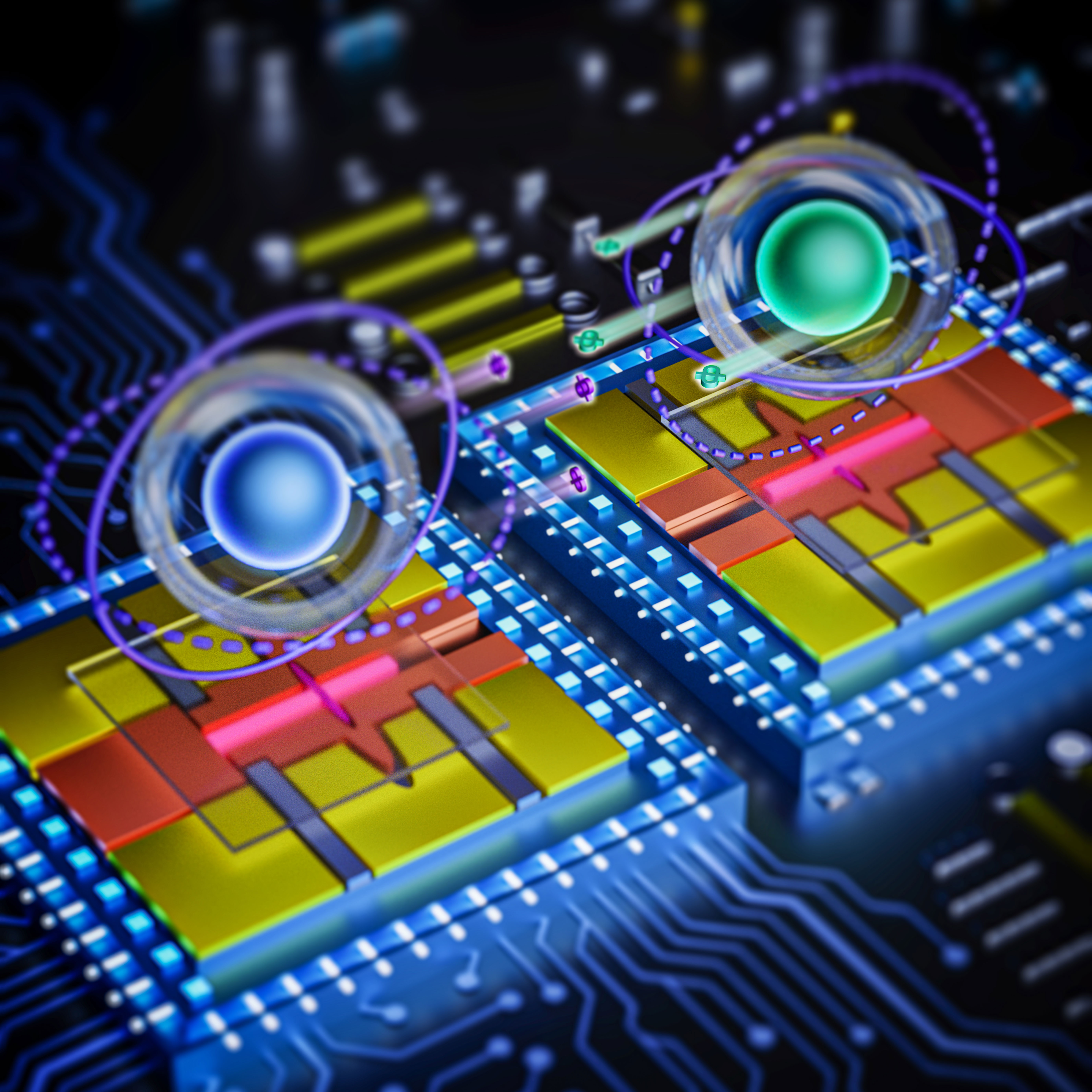 Electron charge qubits, which are to quantum computing what bits are to conventional computing, are one of the compelling candidates for solid-state quantum computing and have the potential for fast processing far exceeding conventional computers. But there are limitations to this technology as it is currently developed. Typically produced on semiconductors or superconductors, they are exposed to various noises such as electrical noise that destabilize them. Once destabilized, they are error-prone and the window of time for processing is incredibly small.
To eliminate the problem, the research team isolated a single electron trapped on an ultraclean solid neon surface in a vacuum, which allows the manipulation of the electron as a qubit via a superconducting circuit located underneath the neon. More importantly, the operation condition of the electron is optimized to a “sweet spot” which is insensitive to the noise. Together with the optimized quality of the solid neon quality as well as the control electronics, the coherence time of the single electron qubit, or the time the electron is essentially stable and capable of high performance, is greatly extended. With the approach, the coherence time increased 100-fold, recording a .1 millisecond time, up from a time on the order of 1 microsecond with qubits developed on traditional technology.
With the significantly suppressed noise factor lessened, the benefits of electron charge qubits, including their simple design and low fabrication costs, will be accessible to researchers and developers. Ultimately, this research could lead to the development of low-cost, large scale quantum computers and enable the creation of a broad range of quantum computing applications.